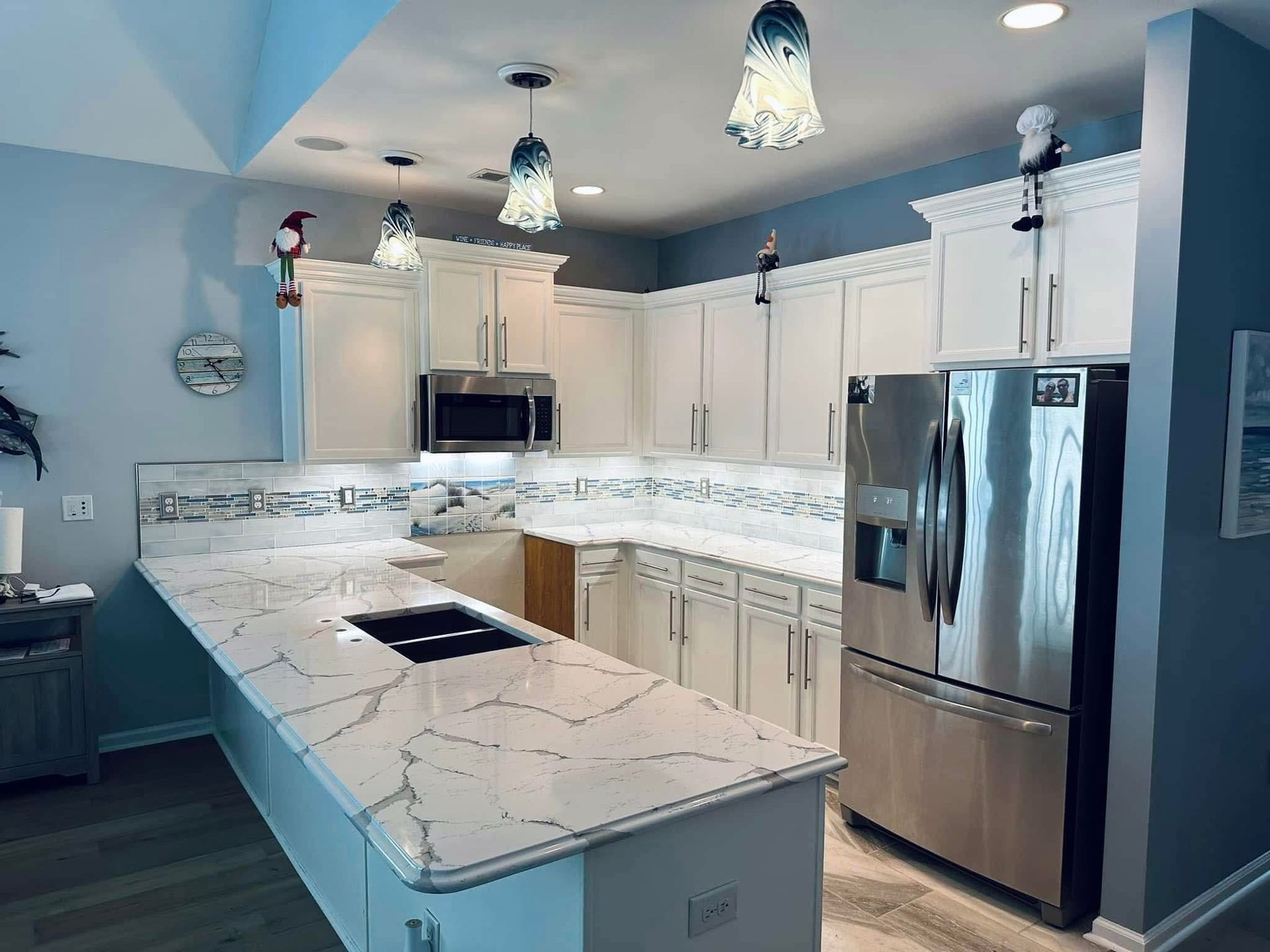
Does Your Granite Countertop Need Sealing in Hartsville, SC?
Granite countertop sealing in Hartsville, SC protects your stone from everyday stains, moisture, and etching that cause lasting damage over time.
What Does Granite Sealing Actually Do?
Sealing fills in the tiny natural pores found in stone so that liquids, oils, and other substances cannot soak into the surface and cause permanent staining.
Natural stone like granite, marble, and quartzite is formed with microscopic pores that remain even after cutting and polishing. Without a protective seal, common household liquids such as coffee, red wine, and cooking oils can seep into those pores within minutes. Once moisture or a staining material works its way below the surface, standard cleaning products often cannot remove it completely.
At The Granite Place and Cabinets, we are a locally owned fabricator that uses state-of-the-art cutting and polishing technology to prepare every stone surface before a sealer is applied. A properly finished and polished surface allows the sealer to bond evenly across the entire countertop, which means more consistent protection from edge to edge.
If you are considering new stone countertops and want to understand what goes into a properly fabricated slab from the start, explore our kitchen countertop fabrication and installation services in Hartsville to see how quality craftsmanship supports long-lasting results.
Signs Your Stone Countertop Is Ready to Be Resealed
The water bead test is the quickest and most reliable way to check your seal: place a few drops of water on the surface and watch what happens over the next two to three minutes.
If the water beads up and holds its shape on the stone, your seal is still doing its job. If the water begins to soak in or darkens the area around it, the protective layer has worn down and your countertop is now exposed. You may also notice that your countertops appear duller than they once did, or that faint discolored patches have appeared near the sink, stove, or food prep area where liquids are most likely to splash and sit.
Bathroom vanity tops near sinks often lose their seal faster than kitchen surfaces because of constant exposure to water, soap, and cleaning products. Checking both surfaces at least once a year is a practical habit for homeowners who have natural stone installed in multiple rooms.
Our granite sealing and maintenance services in Hartsville are designed to restore that protective layer before damage sets in, helping you get significantly more years of beauty and durability from your stone investment.
Does Sealing Work the Same Way for Marble and Quartzite?
Engineered quartz countertops are manufactured to be non-porous and generally do not require the same type of sealing that natural stone needs to stay protected.
Marble and quartzite, however, are natural stones that are typically more porous than granite and may need sealing more frequently, especially in kitchens where acidic foods like citrus juice and tomatoes can etch the surface in addition to staining it. A beautifully finished marble countertop brings a classic look to any kitchen or bath, but the maintenance schedule is a genuine consideration when selecting your material.
Our team walks you through the differences in porosity and maintenance requirements between each stone type as part of the design consultation process. Understanding what your specific material needs before installation means fewer surprises later and a clearer routine for keeping your surface in excellent condition for years to come.
How Hartsville's Summer Climate Shapes Your Sealing Schedule
Hartsville, SC sits in the Pee Dee region of South Carolina, where hot, humid summers can accelerate the breakdown of stone sealers faster than many homeowners expect.
High indoor humidity combined with warm temperatures can cause sealers near exterior doors, outdoor kitchen areas, or sun-facing windows to wear down more quickly than they do in fully climate-controlled spaces. South Carolina's seasonal cycle from warm, wet summers to cooler, drier winters also introduces slight expansion and contraction in natural stone, which gradually loosens the bond between the surface and its protective layer over time.
A practical approach for Hartsville homeowners is to schedule a sealing inspection each spring, before heat and humidity reach their peak. Addressing worn sealers in early spring allows the new product to cure in moderate temperatures and gives your countertops a fresh layer of protection right at the start of the heaviest-use season of the year.